The Ritual, Reworked: TEREA, ILUMA and the Shape of a Habit
There is a pause before the first use of the day that I never thought much about until it changed. For years, that pause was filled with the small mechanics of fire: the flick of a lighter, the draw that had to be coaxed, the ash that gathered and had to be tended. Now, with a heated device, the pause is quieter. I press a button or simply lift the device, wait a few seconds for the element to reach temperature, and draw. The ritual remains, but its texture has shifted. TEREA heatsticks sit at the center of that shift for me, and this essay is an attempt to describe what actually changes when you stop burning and start heating.
I am not here to sell anyone a device. I am a long-term smoker who has spent enough years with a cigarette in hand to notice when a habit rearranges itself. What follows is a reflection on the four parts of the routine that matter most: the pause before use, the objects involved, the way the habit fits into a day, and the slow process of deciding what a ritual is really for.
The pause before the first draw
With a cigarette, the pause is almost theatrical. You tap the pack, you put the filter to your lips, you strike a flame, you pull until the tip catches. The whole sequence takes less than ten seconds, but it is full of small physical commitments. Each step tells your body that the habit is beginning. The smell of the flame, the slight warmth on your fingers, the first harsh draw — these are cues, and over the years they become as important as the nicotine itself.
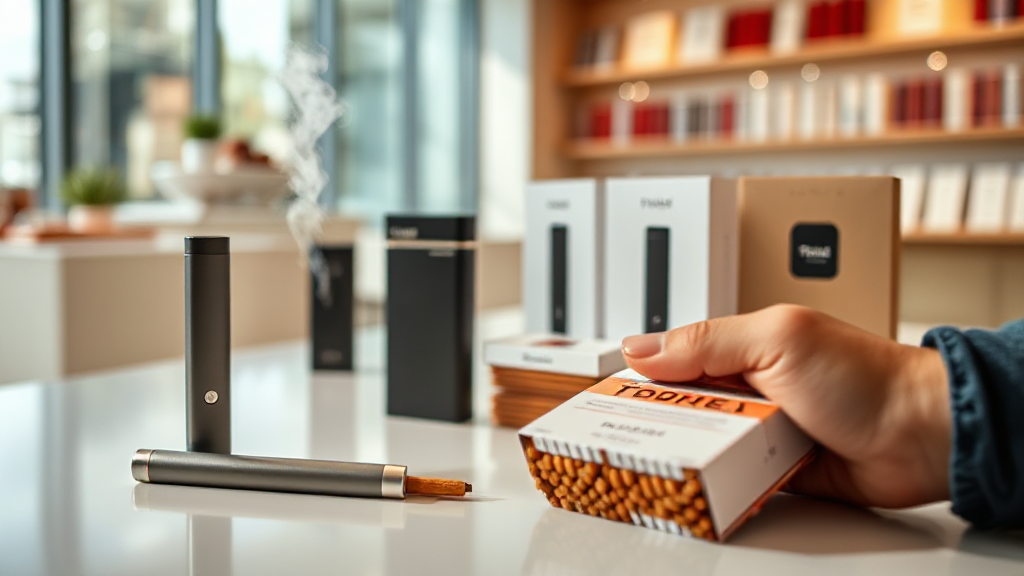
Heating changes the cue structure. A TEREA stick is shorter and denser than a cigarette, and it goes into a device rather than into a flame. The device has to be charged, the stick has to be inserted the right way, and the heating element needs a moment to reach its working temperature. The pause becomes a moment of preparation rather than ignition. There is no flame, no ash, no smoke in the conventional sense. What rises is a vapor carrying nicotine and flavor, and the first draw is warmer and softer than a burned one.
I noticed the difference most in the early morning. A cigarette used to wake me up with a jolt — the heat, the bite, the smell that clung to my fingers. The heated version is gentler. It still marks the start of the day, but it does so with less drama. For some people that is a loss. For me, it was the first sign that the ritual could be separated from the combustion.
The objects that carry the habit
Every habit has its props, and the shift from burning to heating replaces one set of props with another. The lighter disappears. The ashtray becomes unnecessary. In their place comes a device — in my case an ILUMA model — and a pack of sticks that look more like short, firm capsules than like tobacco. The device is a small piece of electronics, and it asks to be treated as such: charged, cleaned, kept within reach.
This is where TEREA heatsticks earn their place in the routine. They are designed to work with the ILUMA line, which uses induction heating rather than a blade. That detail matters more than it sounds. Older heated-tobacco devices required a heating element that could break or need cleaning; the induction system seals the tobacco inside the stick and heats it from the outside. The result is a routine with fewer failure points. You insert the stick, the device recognizes it, and you draw.
The trade-off is dependence on a supply chain. A cigarette habit can be fed from almost any corner shop. A heated habit depends on having the right sticks for the right device, and on having a charged battery. The ritual becomes more deliberate because it requires planning. I keep a charged device and a spare pack in the same drawer, the way I once kept a lighter and a pack. The props have changed, but the logic of readiness is the same.
What the objects teach you about the habit
Living with a device rather than a flame makes the habit visible in a new way. You notice how often you reach for it. You notice the charge level. You notice the cost per stick, which is easier to track than the cost of a pack because each stick is a discrete unit. None of this makes the habit virtuous. It simply makes it legible. For a long-term smoker, legibility is not nothing. It is the beginning of thinking about the habit rather than merely performing it.
How the habit fits into a day
A burned cigarette is a punctuation mark. It ends a task, begins a conversation, fills a gap between meetings. The ten minutes it takes to smoke one are ten minutes of enforced pause, and many smokers build their day around those pauses. Heating does not remove the pause, but it changes its length and its social texture. A TEREA stick lasts a comparable amount of time, yet it produces no sidestream smoke, which means it can be used in places where a cigarette cannot.
That difference is practical before it is philosophical. I have used a heated device on a balcony where a cigarette would have bothered the neighbors, and in a car where the smell would have lingered for hours. The habit becomes less intrusive, and that changes how often I reach for it. A ritual that is easier to perform is also easier to over-perform. This is the central trade-off of the heated routine, and it deserves more attention than it usually gets.
The other change is temporal. A cigarette has a clear beginning and end: you light it, you smoke it down, you stub it out. A heated stick has a beginning and an end too, but the end is signaled by the device rather than by your own judgment. You cannot chain-smoke a TEREA stick the way you can chain-smoke cigarettes, because the device will stop heating after a set number of draws. The ritual is bounded by the technology, and that boundary is either a discipline or an irritation, depending on the day.
What the ritual is really for
After enough years, a smoker learns that the cigarette is doing several jobs at once. It delivers nicotine, yes, but it also provides a reason to step outside, a way to mark time, a social prop, and a small physical task for restless hands. The shift to heating does not eliminate any of those jobs. It changes the means by which they are done. The step outside is still a step outside. The mark of time is still a mark of time.
What changes is the cost side of the ledger. There is no tar from combustion, no ash, no lingering smell on clothes and furniture. That does not make heated tobacco harmless, and anyone who tells you otherwise is overselling the category. Heated tobacco is a different risk profile, not an absence of risk. The honest way to think about it is as a substitution: you are replacing one ritual with another, and the new ritual has its own dependencies, its own costs, and its own small pleasures.
I have come to think of the ritual as a shape rather than a substance. The shape is the pause, the prop, the boundary, the reason. The substance is what you put into it. For me, TEREA heatsticks and the ILUMA device have changed the substance while leaving the shape largely intact. That is not a transformation story, and it is not a conversion story. It is the story of a habit that got quieter, more deliberate, and slightly more legible to the person living inside it.
The pause before the first use of the day is still there. It is just less theatrical now, and more considered. Whether that is better depends on what you were looking for in the ritual in the first place.